The role of the root microbiome in sustaining ecosystem services under auxinic herbicide stress
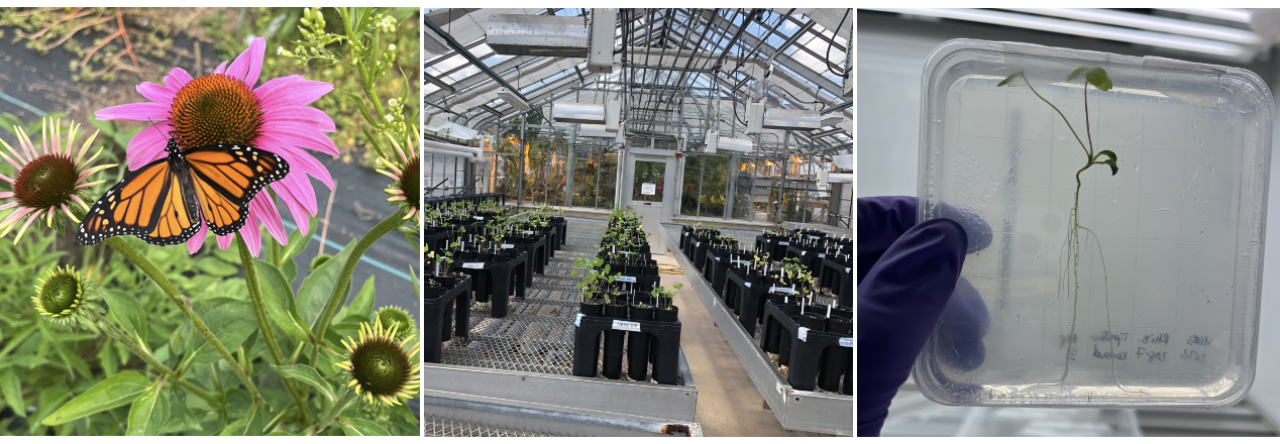
A growing body of research is showing that the root microbiome is an important driver of plant health and can help plants withstand various types of stress. For example, microbes living within root tissues or in the rhizosphere can biosynthesize natural compounds that promote plant growth or detoxify harmful compounds like heavy metals and pesticides in the surrounding soil. A large question that remains, however, is whether the root microbiome influences plant tolerance to synthetic auxin herbicides, which are a common source of herbicide drift pollution (when herbicide particles move away from application sites through the air) in agroecosystems. Moreover, it is unclear whether the composition of the root microbiome interacts with herbicide exposure to affect how plants perform in mutualisms with pollinators and nitrogen-fixing rhizobia, both of which provide key ecosystem services. My current postdoctoral research project with the Baucom and James labs at the University of Michigan is addressing these questions using a combination of observational studies, field experiments, and bioinformatic analyses. With this research, I seek to uncover a more holistic understanding about how auxinic herbicide pollution affects wild ecosystems, and the role that root-associated microbes play in the equation.
Will pesticide pollution cost plants their mutualisms with N-fixing rhizobial bacteria?
Plant mutualistic interactions with soil bacteria called rhizobia provide the key ecosystem service of biological nitrogen fixation. In these interactions, rhizobia transform atmospheric nitrogen into a nutritional form that plants can absorb in exchange for carbon, which ultimately enhances soil fertility and contributes to terrestrial nutrient cycling. However, pesticide pollution via drift, which occurs when pesticide particles are taken up by the wind and carried to non-target areas, is a modern anthropogenic force that plants and their rhizobial partners are commonly exposed to and evolving in response to. In order to understand the consequences of pesticide drift, particularly from the widely-used synthetic auxin herbicide dicamba, on the evolutionary ecology of the plant-rhizobia mutualism, I conducted greenhouse and laboratory experiments with the red clover study system during my PhD. Overall, I uncovered that stress caused by herbicide drift often had detrimental effects on the quantity of plant-rhizobia interactions and biological nitrogen fixation, however genetic variation from rhizobial partners was an especially important driver of mutualism outcomes (Iriart et al., 2024, Iriart et al., In Review).
Research in Action!




 Veronica Iriart