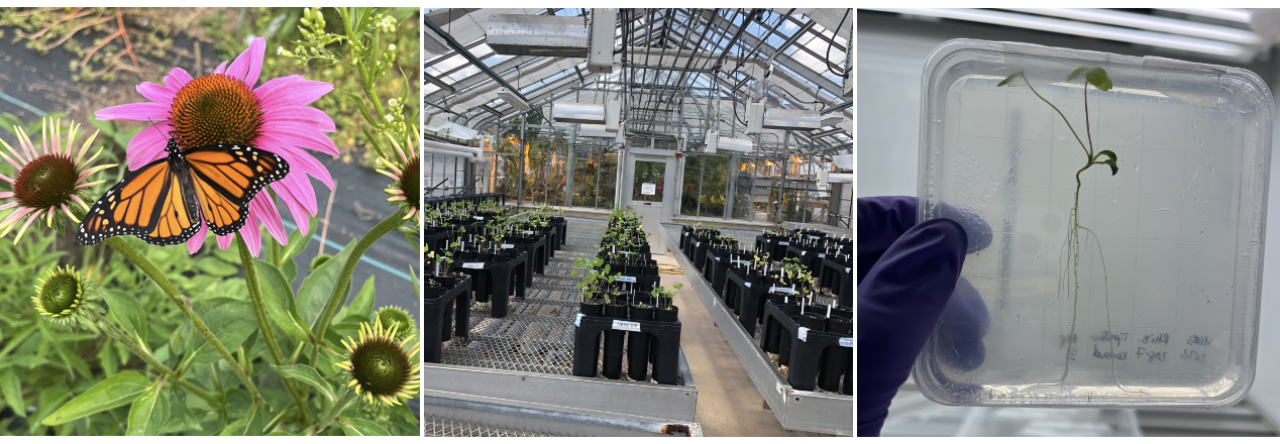
Much of our daily life and the biodiversity we appreciate on Earth is dependent on ecological mutualisms, or beneficial interactions between species. Bees and other pollinators carry out the reproduction of flowering plants in exchange for pollen and nectar, aiding in the production of everyday foods like blueberries, almonds, and even chocolate. Photosynthetic algae provide sugars and oxygen to corals in exchange for a stable habitat, resulting in the vibrant coral reef ecosystems that people travel far and wide to see. But in a world that’s riddled with anthropogenic change (climate change, pollution, habitat degradation, etc.), how are mutualisms being altered as a result? Can these positive interactions be maintained or will certain stressors cause them to break down? What underlying biological forces mediate the outcomes of mutualisms under stress? These are the big questions motivating my research. Currently, I am researching the effects of herbicide pollution on plant-pollinator mutualisms and mutualisms between plants and microbes from the root microbiome with the Baucom Lab and the James Lab as a postdoctoral researcher at the University of Michigan.
About Me

Welcome! My name is Veronica Iriart (pronounced like eerie + art), and I am an evolutionary ecologist. Before starting my current position as a postdoc at the University of Michigan, I received my PhD in Biological Sciences from the University of Pittsburgh, where I worked in the Ashman Lab. In my dissertation, I researched the effects of pesticide pollution on flowering patterns in plant communities and the symbiotic mutualism between plants and nitrogen-fixing rhizobial bacteria.
I was fortunate to have obtained several unique research experiences in the past which ultimately inspired my current work in science. These included: Australian wildlife research during a semester abroad at the University of Melbourne (Melbourne, VIC, AUS), integrative animal behavior work at my alma mater, Wake Forest University (Winston-Salem, NC), and marine ecology and evolution research during an internship at the University of Massachusetts – Boston (Boston, MA).
I believe an important part of my job as a scientist is to act as a science communicator. In my blog, I share discoveries from my research, fun activities for science outreach, and just some general musings about the amazing role of plants in our world. If you’d like to get in touch, please see my Contact page!
 Veronica Iriart